Probably Fine
II. Marks on the Street
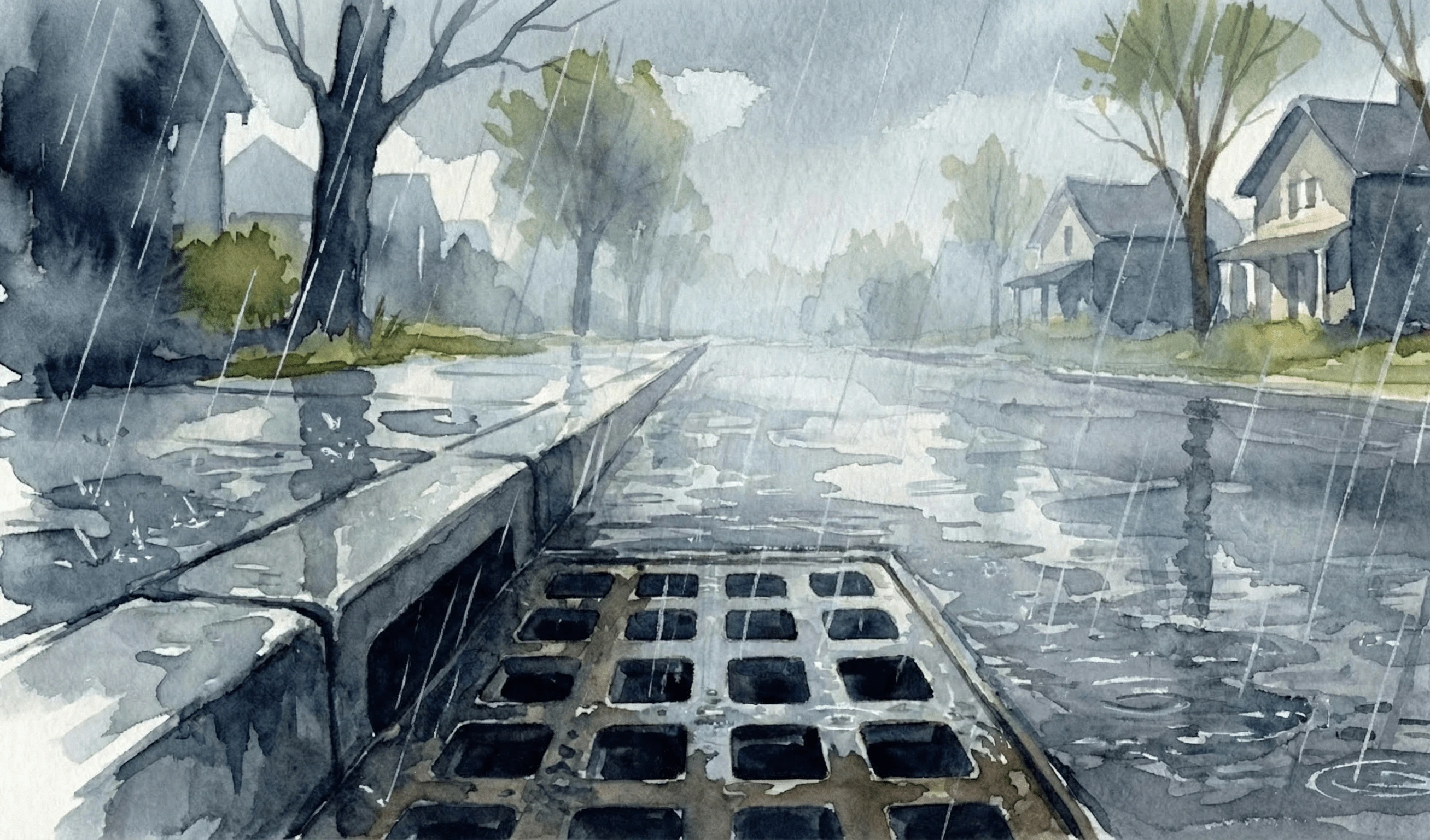
4. Habits
Claire
After a few weeks, he became part of the landscape.
I’d stand at the kitchen window with my coffee and he’d be there somewhere: at the corner, halfway down Hazel, or not at all, which somehow counted as a sighting. You get used to scanning for a specific shape. Even when it isn’t there, your eyes check the spot out of habit.
Everything else on the street behaved normally. Joggers in shorts I wouldn’t wear indoors. Parents half-jogging kids to the car. The man with the husky who always pretended the leash was optional. Same creek of traffic on the main road. Same oaks dropping leaves right where everyone’s gutters hated it.
But knowing he might appear changed the frame. It gave the morning a faint hinge. One small thing that could be here or not, steady or missing.
I was noticing hinges a lot. Empty-nest mornings stretch in a way no one warns you about. Without cereal boxes and “Mom have you seen” and doors closing in teenage rhythms, the house reverts to its structural noises. HVAC click. Refrigerator hum. One mug, one spoon, one chair pushed back from one breakfast.
So I paid more attention to the corner than a person with a functioning social life probably would.
Rain picked up again that fall. Soft, polite rain most days. The kind that makes the street look recently ironed. After last year’s water surprise, I watched the gutters like they were trying to trick me. Maple seeds piled in drifts. The downspout coughed when it swallowed a clump too quickly.
He liked the wet days best. No umbrella. Jacket zipped high. Clipboard hugged under one arm to keep his notes dry. If he had the measuring wheel, the wet pavement made it squeak. Soft, steady, unavoidable.
Once, during a heavier shower, he nudged a branch off the grate with his shoe. The water pulled down fast the moment it was clear. He timed it on his watch. Wrote something. Shifted his stance. That was it. But it said more than any post on the neighborhood page.
Inside, the dishwasher beeped, asking for attention. I let it. The house felt less empty with someone outside paying attention to something we all depended on but forgot about until it failed.
A few days later, after the rain finally gave up, I walked down to the corner under the excuse of checking the mailbox. That’s when I saw the pencil mark, a thin line just above the spot where the street had dried. Not official chalk. Just a small measurement left by someone who didn’t want it to disappear in a day of errands.
A car stopped to let me cross. So I crossed, because apparently I was now the kind of person who respects traffic choreography even when I’m just spying on curb lines.
Walking back, I checked the mark again, as if the curb might have grown in the last thirty seconds.
Every morning after that, I looked for the clipboard before I checked the weather. It wasn’t romance. It wasn’t even curiosity anymore. It was steadiness. Someone else tracking the shape of the street while the rest of us made coffee.
In a house that had lost most of its moving parts, that counted for something.
5. Flags
Cass
Brookside had more flags than a utility crew with a grudge.
Bright orange stakes dotted the greenbelt in a rough grid, closer where the ground dipped, farther apart on the flat parts. At a distance, it looked sloppy. Up close, intentional.
I walked the path pretending to check directions on my phone so I didn’t look like someone cataloging backyards. Subdivisions react poorly to strangers with notepads.
Every flag had a Sharpie scribble: angles, numbers, abbreviations. The curbs were marked too, faint chalk lines at joints, arrows pointing toward the drains. Not professional. Not random. Someone doing work the city hadn’t asked for.
Then I found the laminated sheet inside the trail bulletin box.
A hand-drawn map. Streets outlined. Drains marked with blue squares and circles. Arrows tracing paths from curb to culvert to retention pond. Clear handwriting. Unexpected precision.
The legend sold it:
Blue arrow - “usual path”
Double blue - “when overworked”
Dashed line - “misbehaves”
A star - “July flood point”
Triangle - “investigate”
This wasn’t a joke. Someone had stared at this place long enough to build a private model and then decided other people might want it too.
A runner slowed as she passed. Jogging stroller, charity 5K shirt, hair matted from humidity.
“New missing dog?” she asked.
“Just the old missing cat and a map,” I said.
She peered into the box. The toddler in the stroller regarded me like a malfunctioning appliance.
“Oh,” she said. “He really laminated it.”
“You know him?” I asked.
“Flood Watch,” she said. “Guy on Hazel. Clipboard. Very serious about the drains.”
“Concerned or concerning?”
“A little of both until he explained it.”
“Explained what?”
“How the drains connect,” she said. “Showed me where to keep yard bags away from the curb so water doesn’t detour into our garage. Actually made sense. Took a while.”
I wrote while she talked.
“Any complaints about him?” I asked.
She shrugged. “Some guy on the group page said he was casing houses. But that guy thinks everyone is casing houses.”
The toddler pointed at the map.
“Pool,” he said.
“Drain,” she corrected. “Close.”
“What do you think his deal is?” I asked.
“Honestly? I think he was here during the flood and now he wants it to make sense. I get it. When the city says something is ‘unprecedented,’ that’s code for ‘please stop asking questions.’”
She jogged off. The stroller wheel squeaked like it agreed.
I photographed the flags, the chalk, the map. Wrote notes. The deeper I walked into the subdivision, the more markings I saw, evidence of a person doing their own slow-motion hydrology report.
It wasn’t eccentric. It was grief mixed with engineering.
6. The Circle
Claire
The morning he wasn’t there, the window felt wrong before I even got to it.
No jacket, no clipboard, no posture I’d grown accustomed to. Just an empty sidewalk and last night’s recycling bin knocked crooked. I stood there longer than necessary, pretending to warm my hands on a mug that had gone lukewarm.
I tried to ignore it. Loaded the dishwasher. Started a laundry cycle for three shirts that didn’t need washing. Stared at the kitchen island as if it might explain the weather.
But I kept glancing outside. The absence felt too loud.
By ten the sky went pale and metallic, the kind of pre-rain light that flattens everything. A delivery truck idled near the corner. I used the excuse to check the mailbox.
The curb still showed faint chalk ghosts from his last round of measurements. A couple of the flags fluttered along the greenbelt like they were waiting for orders. Without him, the whole setup looked abandoned.
I felt ridiculous caring this much about a stranger’s morning routine. But emptiness echoes. If you leave a place quiet long enough, you start hearing things that aren’t there.
Then I heard something real: the squeak of the measuring wheel.
He came up Hazel Court from the opposite direction, wheel in one hand, clipboard under his arm, hair damp. Jacket unzipped like he’d rushed.
I stopped near the mailbox and pretended to examine junk mail. It didn’t fool either of us.
“Morning,” he said, slightly out of breath.
“You’re coming from the north today,” I said.
“Wanted to see how the higher drains handle a mist like this,” he said. Like mist had personalities.
He tapped the wheel against the curb, made a short note, then stepped back to see the drain from a different angle. Nothing dramatic. But the empty part of the morning clicked back into place.
I went inside. The dishwasher beeped again. The house sounded less like a hollow container and more like something that still held shape.
7. Interviews
Cass
I spent the next hour talking to neighbors, which in a subdivision means ringing doorbells and hoping the first face isn’t a Ring camera telling you to leave a message.
Hazel Court had the usual variety:
- a retiree who apologized for not having cookies,
- a man who opened his door only as far as the chain allowed,
- a young couple who apologized for the mess behind them that I couldn’t see,
- and one teenage boy who stood in the doorway like conversation was a court-ordered penalty.
“What do you know about the guy with the clipboard?” I asked.
“Oh, him?” the retiree said. “He showed me how to angle my trash cans so water doesn’t pool by the curb. Nice enough. Talks in diagrams.”
The man behind the chain said, “He’s harmless. People online complain because they need a hobby.”
The young couple said, “He asked if we’d had water up to the porch last year. Then he showed us which drain to watch. Honestly helpful.”
The teenager shrugged. “My dad thinks he’s building a lawsuit. My mom thinks he’s doing science. I think he’s just committed.”
Good line. Bad source. I wrote it anyway.
Finally, a man coiling a hose near his garage said, “You’re looking for Eldon, right?”
“That his name?” I asked.
“Mailbox says so,” he said. “He was the only one calm during the flood. While the rest of us watched water climb the driveway, he was already explaining where it was coming from.”
“What’d he say?”
“That the water was following the path we built for it, not the one we wanted. Sounded philosophical. He meant it literally.”
“Any complaints about him?” I asked.
The man shook his head. “People complain about anything that reminds them they’re not paying attention.”
Back at the car, I reviewed my notes. None of it was headline material. But it had a shape.
A man with a wheel, a clipboard, and a problem he refused to let stay invisible.
Small story.
But the small ones are the most honest.